
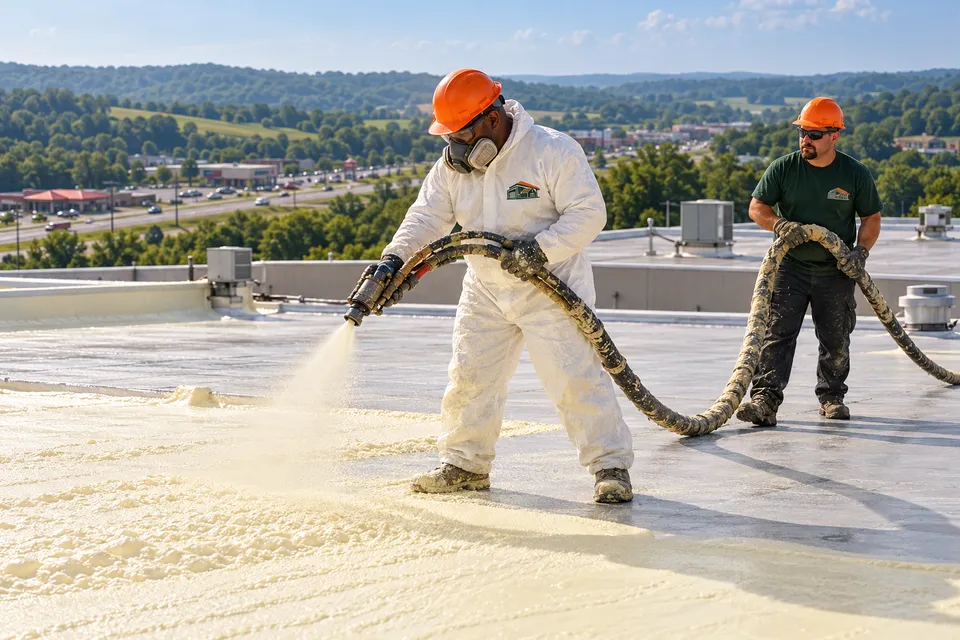
Radcliff Spray Foam Roofing
Spray foam roofing in Radcliff goes over existing metal panels, filling the ribs, burying every screw, and adding insulation before a coating seals the foam from sunlight.
- Insulation added above the deck
- Every screw buried under foam
- Spraying held to wind limits
Is Foam Right For This Building?
Foam costs more than a coating alone. These lines show where the extra insulation and smoother surface pay off.
- Usually Fits
- Sometimes
- Rarely
| What You See On The Roof | Spray Foam Plus Coating | Coating Only |
|---|---|---|
| Heated shop or office used all winter | Usually Fits | Sometimes |
| Unheated equipment shed | Rarely | Usually Fits |
| Rain noise loud enough to bother staff | Usually Fits | Rarely |
| Leaks at hundreds of screw heads | Usually Fits | Sometimes |
| Gutters and eave trim in good shape that should stay as is | Rarely | Usually Fits |
| Older pole barn framing that nobody has checked | Sometimes | Sometimes |
Foam raises the roof surface, so edges, gutters, and ridge vents get rebuilt. A building that only needs its leaks stopped usually gets a coating alone.
What Foam Fixes On Metal
These six conditions push owners from a coating toward spray foam roofing.
Thin Or Missing Insulation
Older metal shops often have little insulation under the panels. Closed-cell foam adds insulation above the deck in the same layer that stops the leaks.
Hundreds Of Leaking Screws
Hand-sealing every screw head on a big roof takes many hours. Foam covers all of them at once, along with the side and end laps.
Condensation Drips
Bare steel over a heated space can sweat on cold mornings, and the drips look like leaks. Foam on the outside keeps the panel warmer, which helps cut that moisture.
Uneven Ribs And Low Spots
Ribs get filled and low areas built up, leaving a smooth surface that sheds water toward the edges and gutters.
Hot Roof Surfaces
A coated foam roof stays cooler than bare steel in summer sun, and the foam slows heat moving into the building below.
Loud Rain On Steel
Foam dampens the drumming of hard rain on bare panels, which matters in offices, churches, and shops where people talk or work below the roof.
Commercial Roof Coating Options for Radcliff
Spray foam over metal comes in these four setups.
Foam With Silicone Topcoat
Silicone over the foam handles the few low spots that remain and goes on in cooler weather. Recoats later stay silicone.
Foam With Acrylic Topcoat
Acrylic over foam fits a well-drained roof in warm months and costs less than silicone at install.
Thicker Foam For Heated Space
Buildings heated or cooled all year get more foam thickness for more insulation, set roof by roof.
New Edges And Gutters
Every foam job includes new edge metal and gutter details sized for the added thickness, so water still leaves cleanly at the eaves.
Benefits of Coating Your Roof
Here is how foam over metal compares with tearing off the old panels.
| What Changes | Foam And Coating | New Metal Roof |
|---|---|---|
| Insulation | Added above the deck in the same layer | Only what goes under the new panels |
| Screws and laps | Buried under continuous foam | New screws and laps exposed to weather |
| Old panels | Stay on as the base for the foam | Removed and hauled away |
| Rain noise | Dampened by the foam layer | Back to bare steel |
| Upkeep | Topcoat recoated as it wears | Screws and washers checked as they age |
Shop Too Cold Or Too Hot?
If the building fights the weather all year, foam over the metal can stop leaks and add comfort in one job. A roof walk tells you whether the framing is ready for it.
What To Have Ready
- Current insulation type
- Roof size and pitch
- Rooftop units and intakes
- Months the building runs heat
Foam Over Metal, Step By Step
Spray foam over metal follows these five stages.
Inspect Your Roof
We check the panels for loose attachment and rust, look at the framing from inside, and note every intake, vent, and gutter the foam will change.
- Framing on older pole barns reviewed
- Intakes and exhaust fans located
Fasten And Repair
Loose panels are fastened down, rusted-through sections replaced, and old gutters removed where new edge details will go.
- Panel attachment tightened
- Rust-through panels swapped
Clean And Mask
Panels are washed and rust treated so the foam bonds to clean steel. Parked cars, nearby walls, and rooftop intakes get covered, and units are shut down.
- Wind speed checked before spraying
- Intakes stay closed while spraying
Spray The Foam
Foam goes on in passes, filling the ribs first, then building to the planned thickness across the field. Thickness gets probed as the spraying moves along.
- Ribs filled flush
- Low areas built up
Coat The Foam
A protective coating goes over the foam soon after it sets, since sunlight breaks down bare foam. Edges, vents, and new gutter details get finished last.
- Topcoat thickness gauged
- Edge metal installed
Topcoats And Other Options
Foam always needs a coating, and some owners compare it with a coating alone.
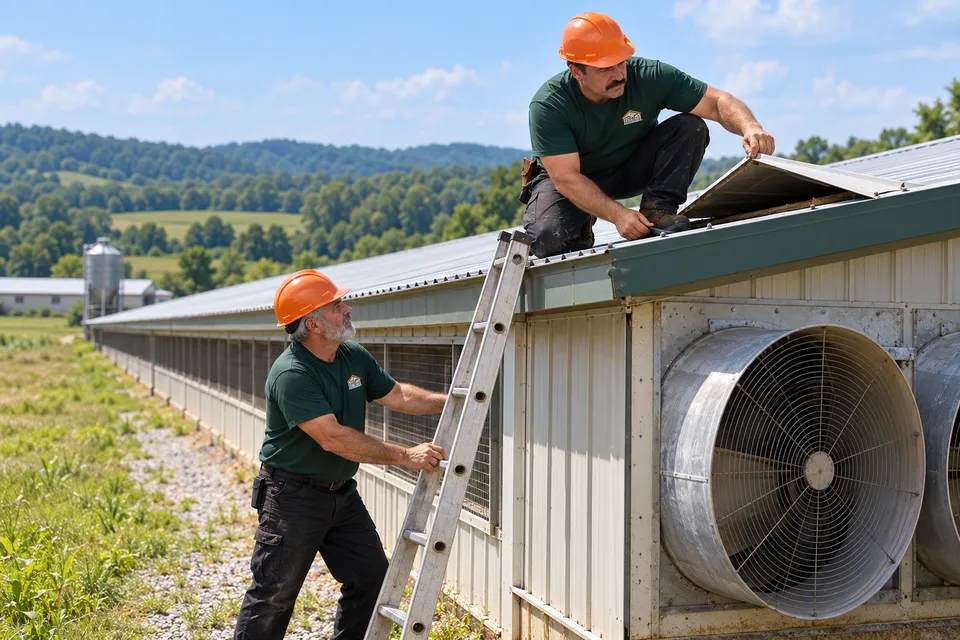
Metal Roof Coating
When insulation is fine, sealing screws and laps with a metal roof coating costs less and leaves the edges as they are.
Metal Roof Coating in Radcliff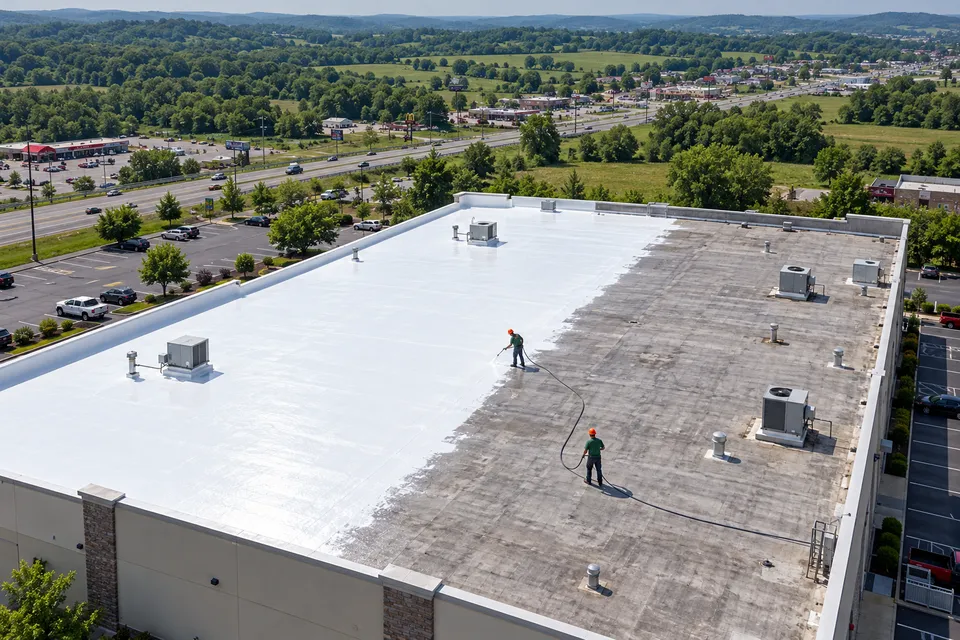
Silicone Roof Coating
Silicone is a common topcoat over foam, especially where a few low spots remain after spraying.
Silicone Roof Coating in Radcliff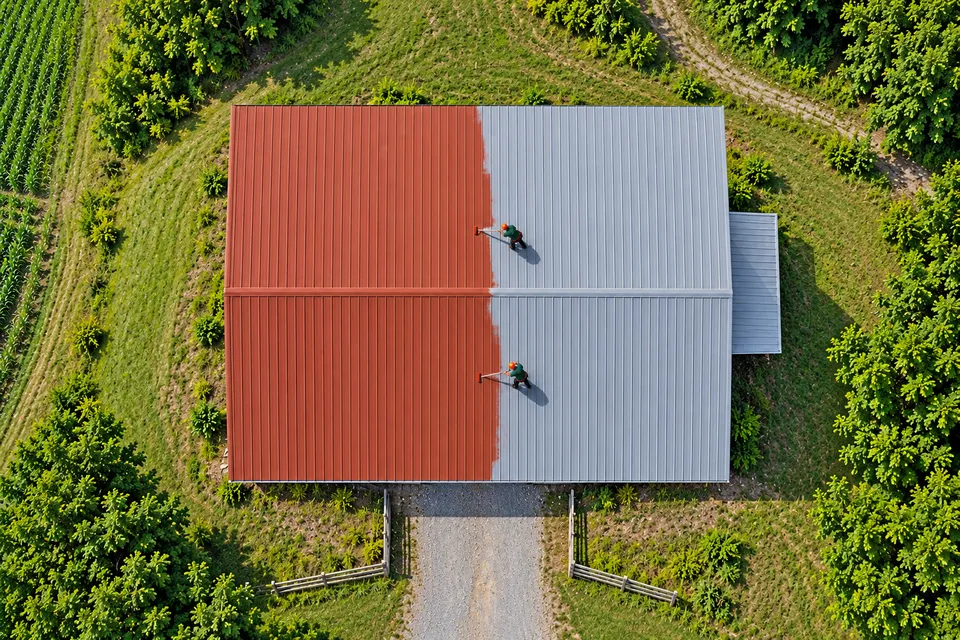
Acrylic Roof Coating
On well-drained foam roofs finished in warm months, an acrylic topcoat keeps the install cost down.
Acrylic Roof Coating in Radcliff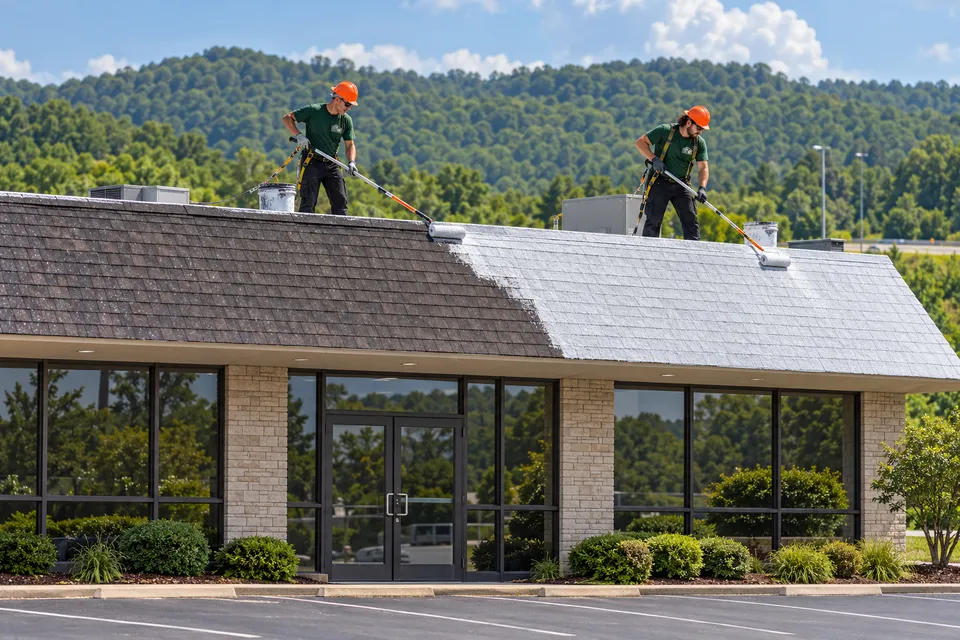
Shingle Roof Coating
A shingled section on the same property gets checked separately and coated with a product made for shingles.
Shingle Roof Coating in Radcliff
Spray Foam Roofing Questions
Answers about foam over metal for Radcliff buildings.
Can spray foam roofing go over an existing metal roof?
Yes. The foam fills the panel ribs into a smooth surface, covers every fastener and lap, and adds insulation in one layer before it gets coated.
Panels still need cleaning and rust treatment first, and loose ones are fastened down. Edges, gutters, and ridge vents need new details because the roof surface rises.
Should I choose spray foam over metal or a coating only?
Choose foam when the building needs insulation and you are ready for new edge and gutter details.
A coating alone seals the metal and keeps the panel shape. Owners who heat or cool the space all year gain the most from foam, while an unheated equipment shed rarely needs it.
Is foam too heavy for an older metal building?
Closed-cell foam adds little weight, but framing on older pole barns gets checked before any spraying.
The check looks at purlins, rafters, and connections from inside the building. If something is bent or rusted, it gets repaired or the foam plan changes before work starts.
How is overspray kept off cars and nearby buildings?
Wind limits, masking, and spacing keep foam where it belongs.
Spraying stops when wind passes the limit for the job, cars get moved or covered, and rooftop intakes stay closed longer than on a coating job, since foam overspray travels farther.
Why does spray foam need a coating on top?
Sunlight breaks down bare foam, so a coating goes on soon after spraying and gets renewed as it wears.
Silicone and acrylic are the common choices. Keeping that topcoat intact is the main upkeep on a foam roof, along with a walk after hail or a hard winter.
Insulate And Seal In One Job
Tell us how the building is heated and how big the roof is. We will check the framing and give you a foam price range.