
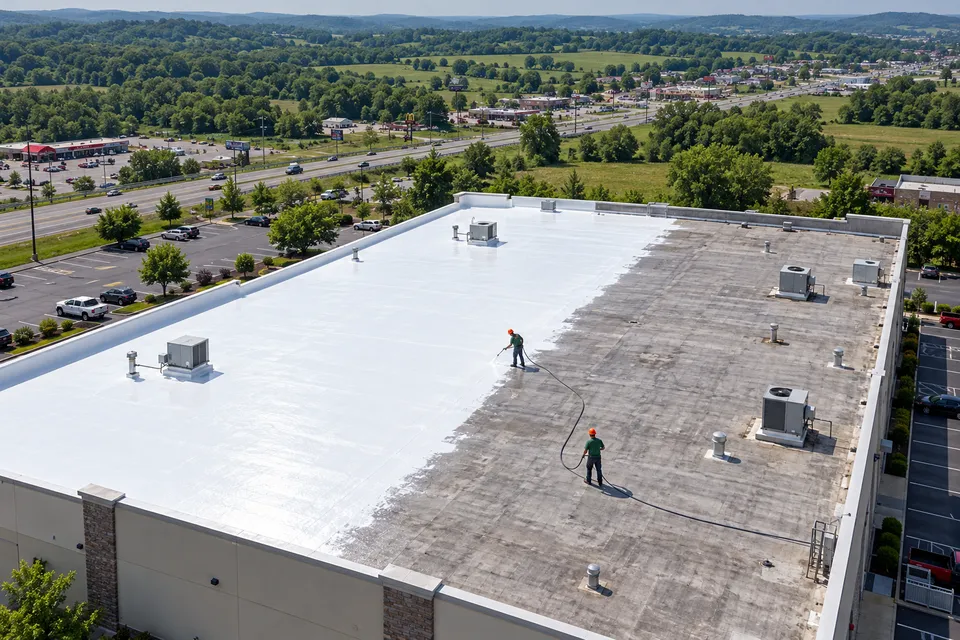
Radcliff Silicone Roof Coating
Silicone roof coating for Radcliff metal and low-slope roofs where water lingers after rain, in box gutters, valleys, and the low end laps of long panel runs.
- Holds up under standing water
- Goes on in cooler months
- Recoats stay silicone
Is Silicone The Right Fit?
Silicone earns its price where water stays put. Where every panel drains fast, acrylic often does the same job for less.
- Usually Fits
- Sometimes
- Rarely
| What You See On The Roof | Silicone | Acrylic | Silicone And Acrylic Split |
|---|---|---|---|
| Box gutters that hold water a day after rain | Usually Fits | Rarely | Sometimes |
| Low-slope panels with puddles at end laps | Usually Fits | Rarely | Sometimes |
| Steep panels that drain within minutes | Sometimes | Usually Fits | Sometimes |
| Valleys between two roof sections | Usually Fits | Rarely | Usually Fits |
| A job that has to run in late fall | Usually Fits | Rarely | Sometimes |
| Owner plans a different coating at the next recoat | Rarely | Usually Fits | Rarely |
A split system puts silicone in the wet spots and acrylic on the slopes, which keeps cost down while low areas stay protected.
What Water Does To Metal
Standing water speeds up every weak point on a metal roof. These six spots decide where silicone goes.
Box Gutters That Stay Full
Built-in box gutters hold water after rain, and their seams and outlets rust first. Acrylic softens in that water while silicone keeps its film, so gutters get cleaned, primed, and coated with silicone.
Low End Laps
Water piles up behind each end lap on a low-slope run and gets pulled under the upper panel. Those laps get fabric and silicone even when the rest of the field takes a different topcoat.
Ponding Rings
Dried rings of dirt mark where puddles sat after the last storm. They show the low spots before anyone walks the roof, and they are where silicone goes on thickest.
Rust Under Wet Spots
Steel that stays damp rusts faster than steel that dries in an hour. Every rusty low spot is wheeled to firm metal and primed, because silicone over loose rust peels away with the scale.
Curbs That Dam Water
Rooftop unit curbs and vent stacks block the flow on low-slope panels, leaving water on their uphill side. Those curbs get fabric flashing and extra silicone where the water collects.
Dirt Pickup Over Time
Silicone holds onto dust and pollen, so a white silicone roof turns gray unless it gets washed. Plan a gentle wash between recoats to keep it reflecting sunlight.
Commercial Roof Coating Options for Radcliff
Silicone goes on Radcliff roofs in four common ways.
Full Silicone Field
Low-slope metal or flat roofs that hold water in many places get silicone over the whole surface, after rust priming and seam work.
Gutters And Valleys Only
When the sloped panels shed water well, silicone goes only where water sits: box gutters, valleys, and the bottom laps of each run.
Silicone Over Old Silicone
A worn silicone roof gets washed and recoated with silicone, since most other coatings will not stick to it. Bare spots are primed first.
Silicone Topcoat On Foam
Spray foam over metal needs a top layer against sunlight, and silicone is one of the choices when the foam surface has a few low spots.
Benefits of Coating Your Roof
With silicone, most of the gain shows up where water used to sit.
| What Changes | Silicone Coating | New Roof |
|---|---|---|
| Gutters and valleys | Coated with a film that holds up under standing water | New gutters that still need upkeep at their seams |
| Application weather | Goes on during cooler, damper days | Tear-off needs dry weather for every open section |
| Roof surface | White film reflects sunlight on summer days | Color set by the new panel finish |
| Later upkeep | Washed and recoated with silicone when worn | Repairs at screws and laps as washers age |
| Building use | Work stays on top of the existing panels | Panels removed over stock and equipment |
Water Still Sitting After A Storm?
Take a photo of the puddles or full gutters the morning after rain. It shows exactly where silicone needs to go.
What To Have Ready
- Photos of standing water
- Number of gutter runs
- Rough roof size
- Any deadline for the work
How Silicone Goes On A Radcliff Roof
Five stages, with the wet areas getting attention at every one.
Inspect Your Roof
We find every spot that holds water, check the laps and screws around it, and probe for wet insulation. A roof that ponded for years often hides soft spots near the low end.
- Low spots mapped after rain
- Moisture readings at gutter lines
Fix Before Coating
Rusted gutter bottoms, split gutter seams, and loose panels near the low end get repaired. Outlets are cleared, and enlarged where needed, so the gutters empty faster.
- Gutter seams resealed
- Loose screws upsized
Clean And Prime
Silicone needs a clean, dry surface, so the panels and gutters get washed and dried, including inside the laps. Rusty steel gets a primer the silicone maker approves.
- Dry time checked before priming
- Adhesion test patch on old coatings
Reinforce Wet Spots
Laps, curbs, and gutter seams in the wet areas get fabric bedded in silicone base coat. Those are the spots where the finished film works hardest.
- Uphill sides of curbs built up
- Fabric at every low end lap
Silicone Topcoat
Two passes, or one heavy pass, go on with extra film in the low areas, and thickness gets checked on a wet-mil gauge. After cure, the gutters are flushed to check that the outlets run clear.
- Extra film in gutters and valleys
- Thin spots touched up
Systems That Work With Silicone
Silicone rarely covers a whole building alone. These pair with it most often.
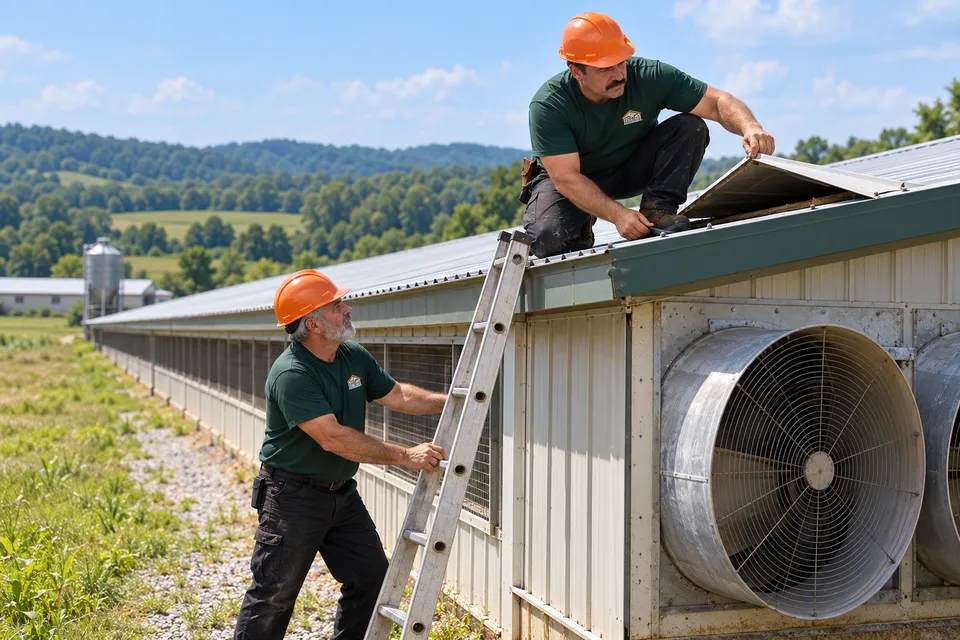
Metal Roof Coating
Before any silicone goes on, the metal itself gets its rust treated and every screw and lap sealed, which is the core of metal roof coating.
Metal Roof Coating in Radcliff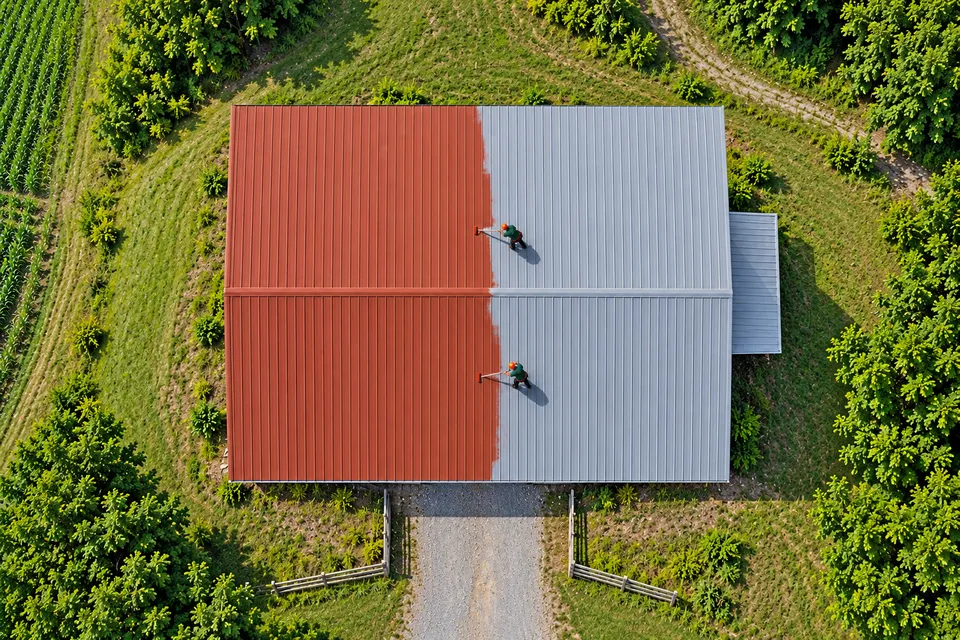
Acrylic Roof Coating
On a roof with steep slopes above wet gutters, acrylic covers the slopes while silicone handles the gutters and valleys.
Acrylic Roof Coating in Radcliff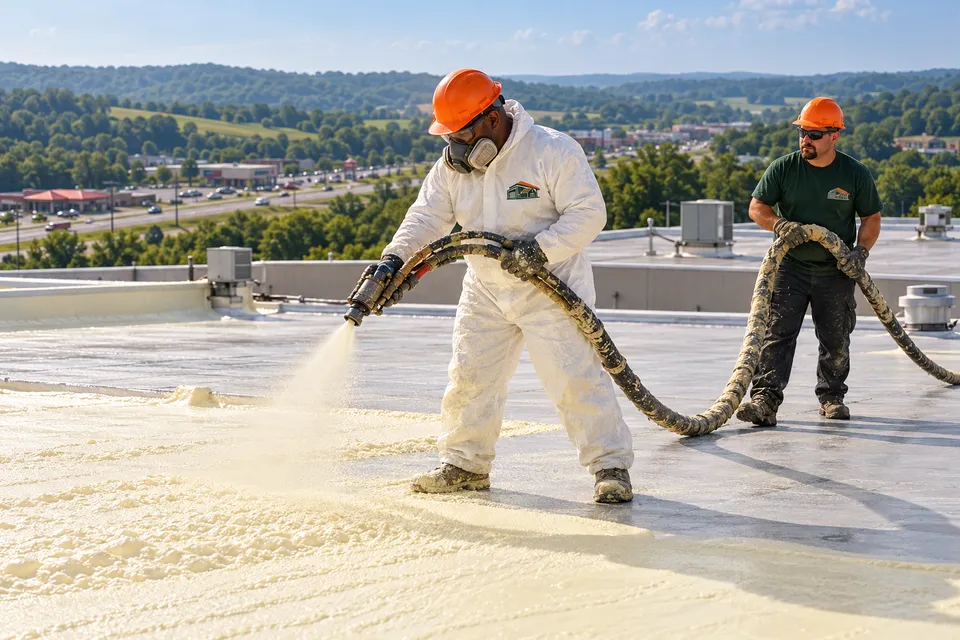
Spray Foam Roofing
Foam over metal smooths out low spots and adds insulation, and silicone works well as one of its topcoats.
Spray Foam Roofing in Radcliff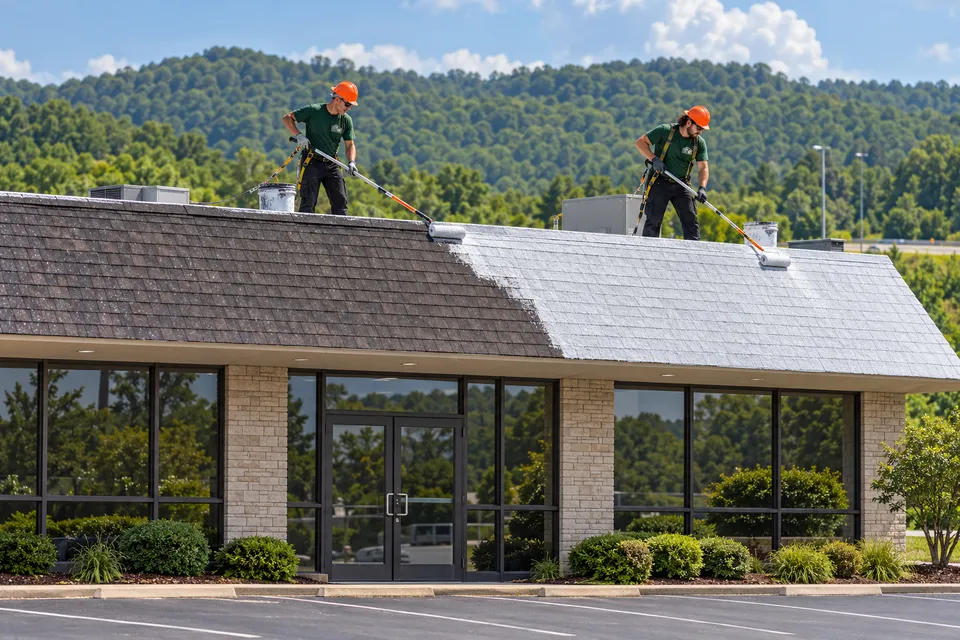
Shingle Roof Coating
A shingled entry or office roof on the same property gets its own check before any coating, starting with the shingle maker's guidance.
Shingle Roof Coating in Radcliff
Silicone Roof Coating Questions
What Radcliff owners ask before choosing silicone.
When does silicone roof coating make sense on a metal building?
Low slope, water in gutters or valleys, and short weather windows are the main reasons to choose it.
It sheds water well and resists sunlight. The tradeoff comes at recoat time: the next coat has to be silicone or go over a primer made for it, and a white silicone surface grays with dust unless it gets washed.
Can the building stay open while the metal roof is coated?
Yes, in most cases. Every step happens on top of the existing panels, so work inside goes on.
Plan for hose lines and a lift in part of the lot, rooftop intakes shut or covered during priming, and stock moved from under known leaks during washing. Overspray near parked cars is handled with wind limits and masking.
Can silicone go over a roof that holds water?
It is where silicone does best, as long as the cause of the ponding gets checked first.
A sagging purlin or a blocked outlet keeps making puddles, and that water can soak the insulation below. Those get fixed or cleared, then silicone goes on heavier in the low areas so the film handles the water that remains.
Can I switch to a different coating later?
Only with a primer made for silicone, because most other coatings slide off a silicone surface.
Most owners stay with silicone at recoat time. The worn roof is washed, any bare spots are primed, and a fresh silicone coat goes on over the old one without tear-off.
Why does silicone fit cooler months in Kentucky?
Silicone tolerates cooler, damper days better than water-based acrylic, which needs warm, dry weather to cure.
That gives a Radcliff job more working days in spring and fall. The steel still has to be dry inside the laps and warmer than the dew point, so early mornings often wait until the panels dry.
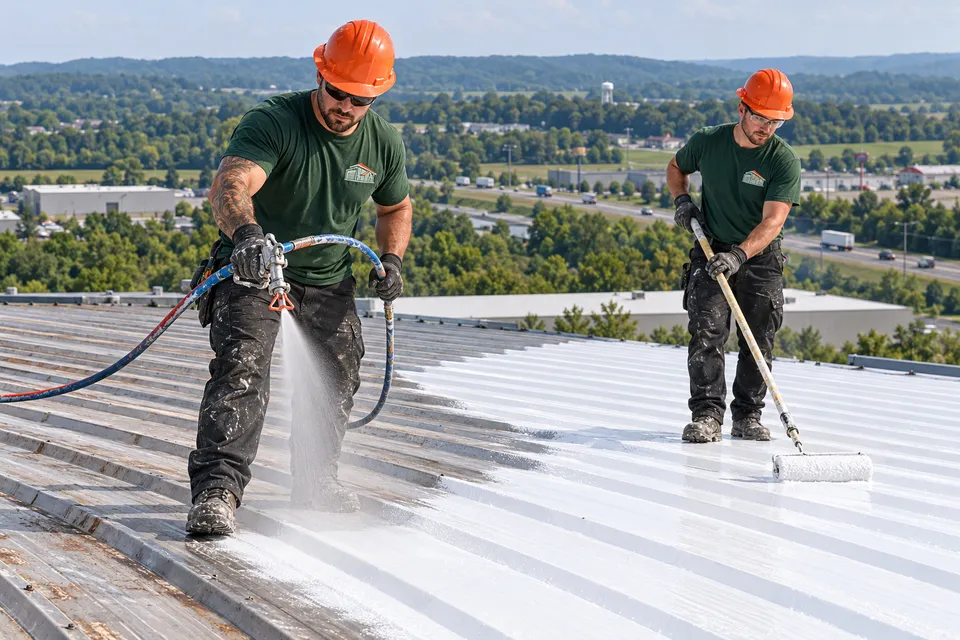
Put Silicone Where The Water Sits
Tell us where your roof holds water after rain. We will walk it and show you which areas need silicone and which can take acrylic.